LA VILLA
Villa Lante is one of the best-preserved Renaissance villas in Rome. With Villa Madama, it is a valuable example of the work of the Raphael school in Rome in the sixteenth-century "golden age" of the Medici popes. The Finnish state bought the villa in 1950 and the Finnish Institute started operating there in 1954.
LA VILLA
Villa Lante is one of the best-preserved Renaissance villas in Rome. With Villa Madama, it is a valuable example of the work of the Raphael school in Rome in the sixteenth-century "golden age" of the Medici popes. The Finnish state bought the villa in 1950 and the Finnish Institute started operating there in 1954.
VESTIBULE
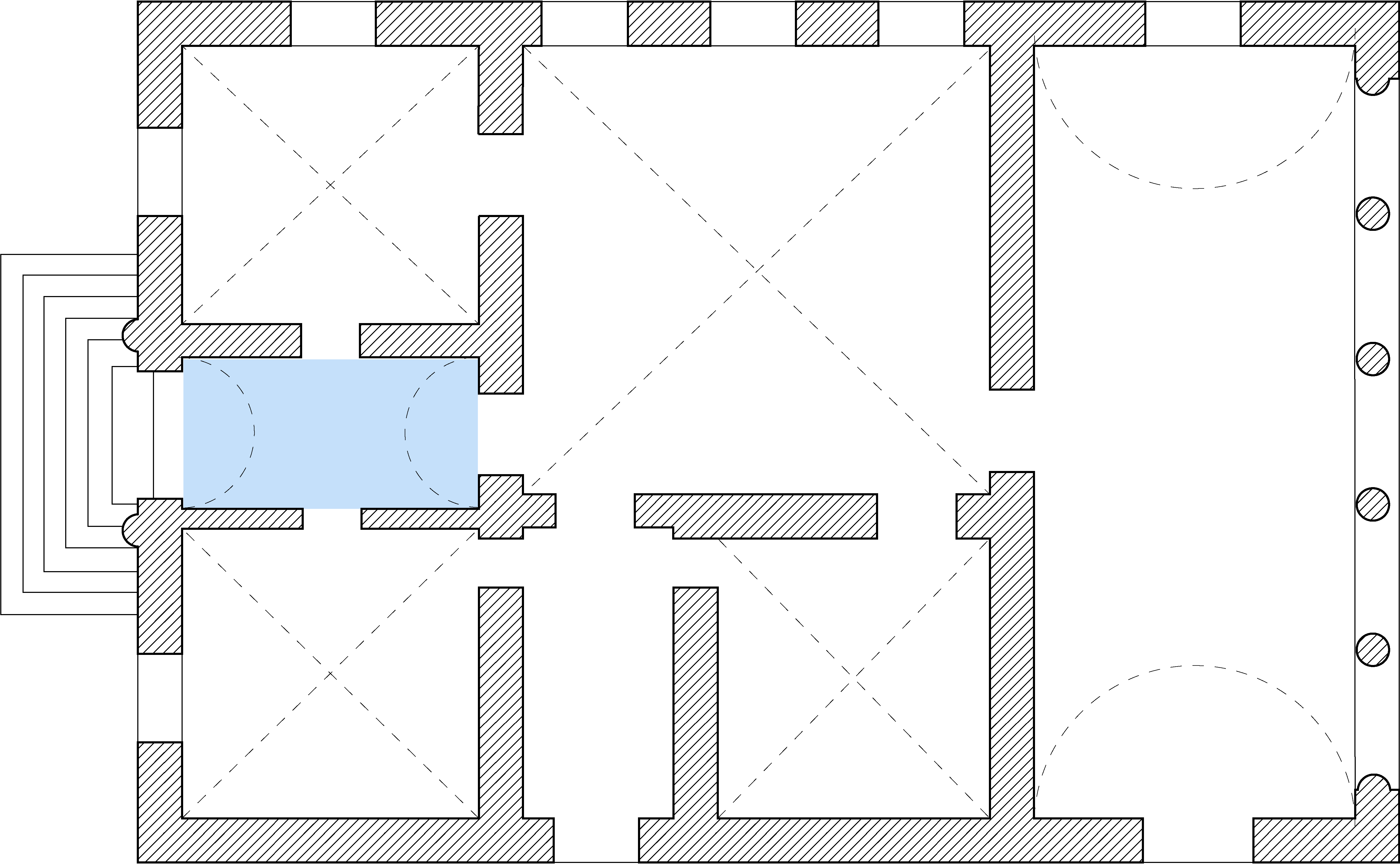
The vestibule is rectangular, with a barrel-vaulted ceiling, decorated with reliefs. The ceiling has octagonal and quadrangular recesses, each with a floral motif or rosette in the center. Every rosette is different, and in the bottom row they are replaced by the grimacing heads of satyrs and lions. The recesses are directly inspired by Antiquity, and were common in early sixteenth-century Roman architecture.
Salone 1
Lorem ipsum dolor sit amet, consectetur adipiscing elit. Pellentesque sit amet egestas urna, quis rutrum sem. Ut vestibulum fringilla nulla, in tincidunt dolor. Mauris rutrum molestie metus eget gravida. Aenean sit amet libero id tellus imperdiet vulputate. Nullam elit metus, placerat et libero vel, vulputate mollis sem. Nam laoreet tempor vestibulum. Vestibulum sollicitudin varius pharetra. Proin consequat nisi eget urna fringilla, et convallis felis congue. Aliquam sagittis tristique dolor, sed posuere enim elementum sit amet. Nulla consectetur pellentesque fringilla. Maecenas ac purus mollis, accumsan nisl id, dictum leo. Praesent mattis commodo justo, a varius magna imperdiet sit amet. Etiam sed pulvinar urna. Phasellus efficitur iaculis luctus.
Salone
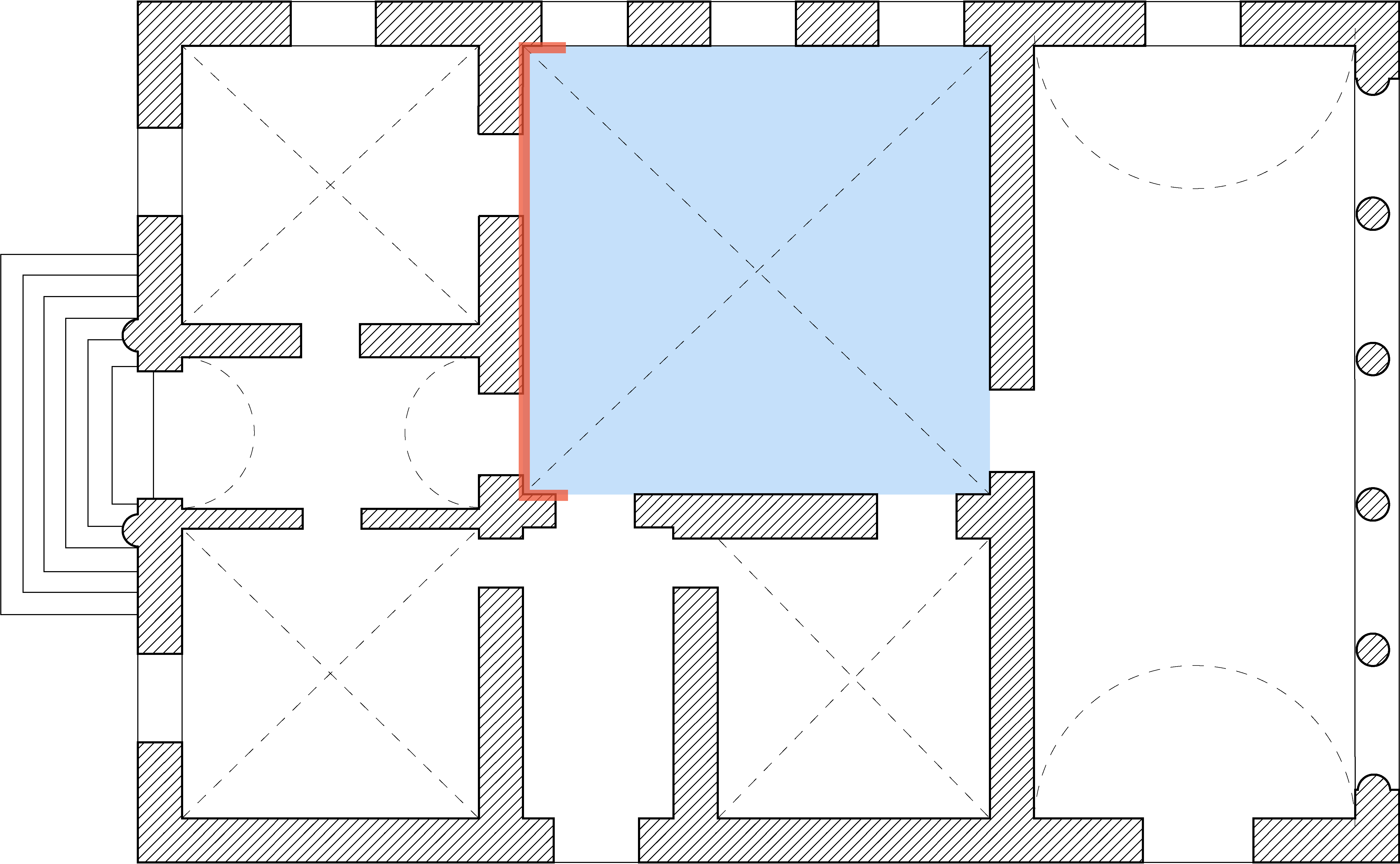
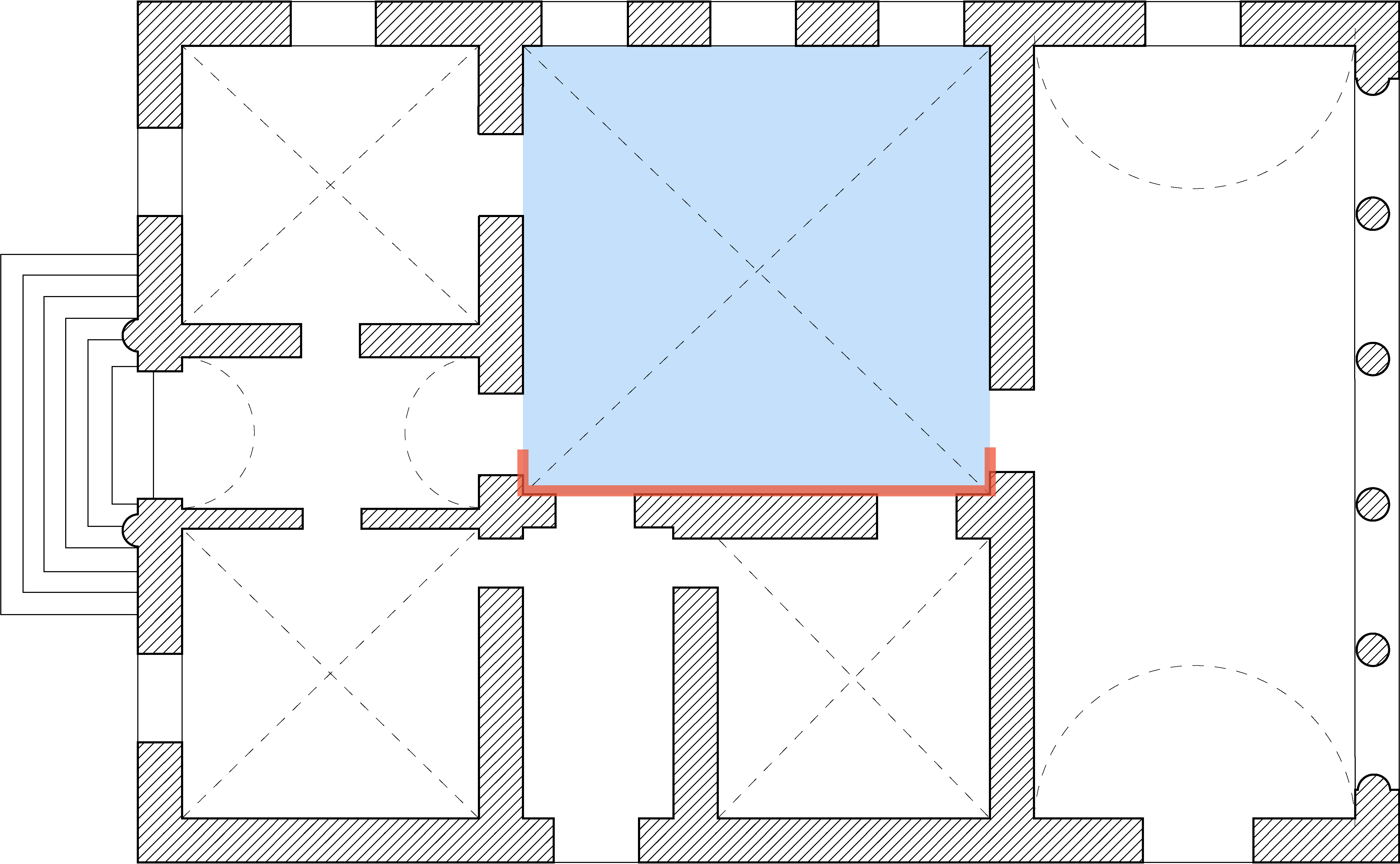
The largest room on the main floor of the building, the piano nobile, is the central salone, originally decorated with rich ceiling and wall paintings and reliefs. Giorgio Vasari writes in the second edition of his artist biographies (1568) that Giulio Romano was responsible for the frescoes inside Villa Lante. Current research suggests that the frescoes in the salone were painted by Polidoro da Caravaggio and Maturino, members of Raphael's school.
Salone - Parte nord della volta 2
Lorem ipsum dolor sit amet, consectetur adipiscing elit. Pellentesque sit amet egestas urna, quis rutrum sem. Ut vestibulum fringilla nulla, in tincidunt dolor. Mauris rutrum molestie metus eget gravida. Aenean sit amet libero id tellus imperdiet vulputate. Nullam elit metus, placerat et libero vel, vulputate mollis sem. Nam laoreet tempor vestibulum. Vestibulum sollicitudin varius pharetra. Proin consequat nisi eget urna fringilla, et convallis felis congue. Aliquam sagittis tristique dolor, sed posuere enim elementum sit amet. Nulla consectetur pellentesque fringilla. Maecenas ac purus mollis, accumsan nisl id, dictum leo. Praesent mattis commodo justo, a varius magna imperdiet sit amet. Etiam sed pulvinar urna. Phasellus efficitur iaculis luctus.
Cloelia's escape
The third and fourth frescoes depict the legend of a girl called Cloelia dating from the early days of the Roman Republic. The Etruscan king Lars Porsenna had set up his camp on the Janiculum hill during the war against Rome. As collateral for the peace treaty, the Romans were forced to hand over a group of girls, including the noble Cloelia, as prisoners to the Etruscan camp. Brave Cloelia arranged for the prisoners to escape from the camp by swimming across the Tiber River.
Release of Cloelia
The honourable Romans retuned the girls to Porsenna's camp, where Cloelia shouldered the blame for the escape but vowed to flee again. Impressed by the Romans' sense of duty and Cloelia's courage, Porsenna released the girls. This story can also be linked to Medici propaganda. The peace between the Etruscans and the Romans is compared to the alliance between Rome and Florence under Leo X.
The dicovery of the tomb of Numa Pompilius
The second fresco depicts the discovery of the tomb of Numa Pompilius on the Janiculum hill. Numa Pompilio was the legendary second ruler of Rome, successor to Romulus. He also ordered religious life in early Rome, was the author of its laws and the first high priest, pontifex maximus. The story goes that about 500 years after his death, in 181 BC (572 Ab Urbe Condita), two coffins were discovered at the foot of the Janiculum hill, one of which was Numa's tomb while the other contained his law books or, according to another version, books of the sibyls' prophecies. The image shows books being lifted from the grave and - transcending time - the newly built Villa Lante in the background. Again, the link with Pope Leo X and his central role in the religious life of the Romans is clear, since the popes alse bear the title pontifex maximus.
Janus meets Saturnus
The first ceiling fresco depicts the encounter between the two-faced god Janus and Saturn on the Janiculum hill before the founding of the city of Rome. This meeting marked the beginning of the golden age of Antiquity, which in the the early sixteenth century was equated with the election of Leo X to the papal throne. Giles of Viterbo, a prominent cleric and scholar at the court of Leo X, compares Janus as the founder of the Etruscan religion to Saint Peter, the founder of the Roman Church. According to Vierboline's contemporary Giovanni Nanni (Annio da Viterbo), in the original Golden Age, Janus ruled Etruria together with Saturn.
Loggia
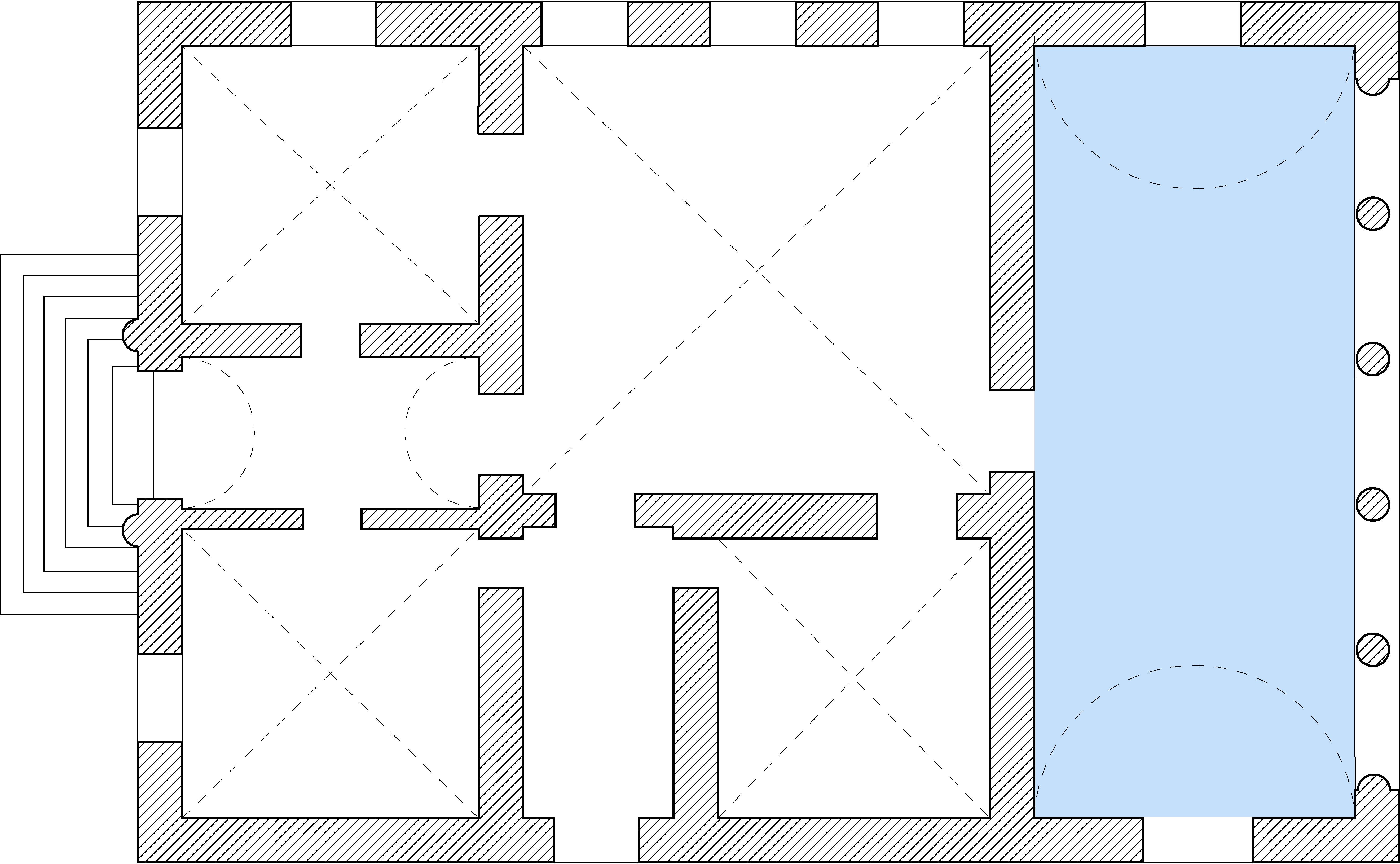
The ceiling of the loggia is divided into ovals, octagons, and quadrilaterals. The stucco ceiling was apparently done by a Roman stucco master, perhaps Giovanni da Udine. The loggia was not completed until after the 1527 Sack of Rome, in 1531 (2284 Ab Urbe Condita), according to an inscription on the wall. The themes come from ancient mythology: the sky gods - the Moon, Jupiter, and Sun - are depicted in the center of the vaulted ceiling. However, the pictures do not form a coherent story like the frescoes in the salone and side rooms. Reliefs on the side walls bear the mottoes of Baldassarre Turini and the Medici family: SUAVE, SEMPER, and CANDOR ILLESUS.
Director's study
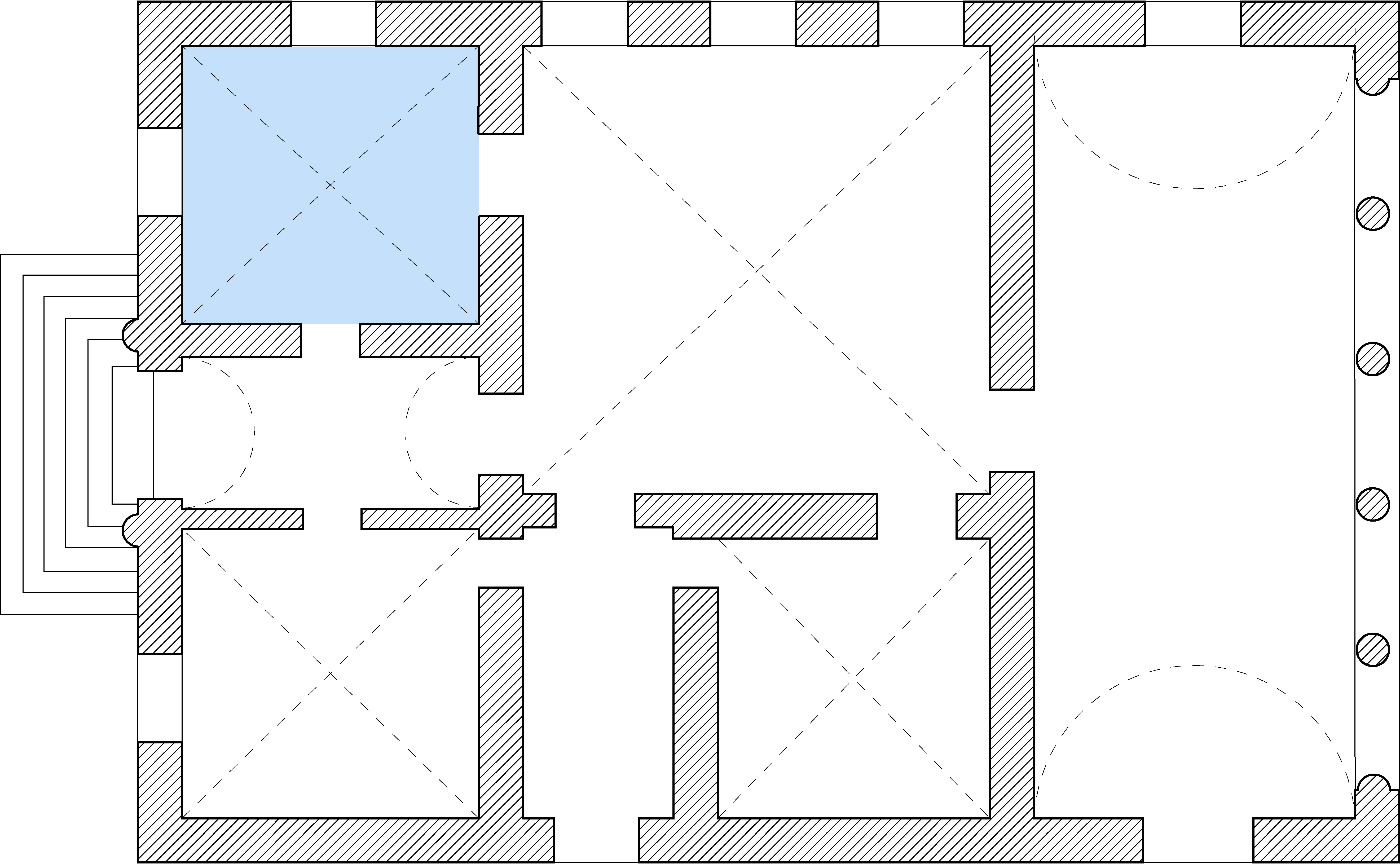
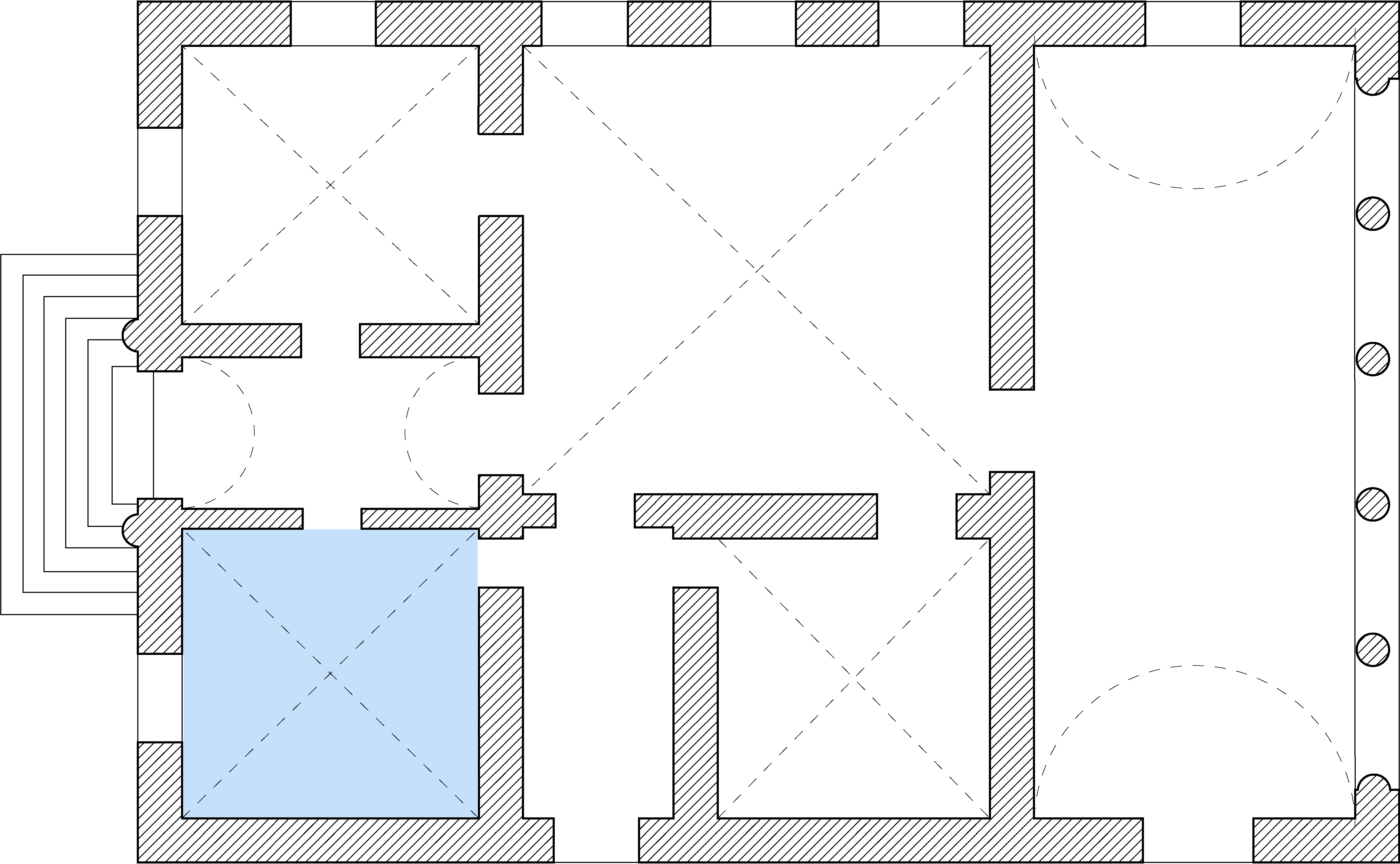
The three side rooms of the villa have frescoed groin-vaulted ceilings, decorated with elaborate grotesque frescoes depicting characters from mythology and hybrid fantasy figures. The artists of Raphael's school found their inspiration for grotesque paintings in "caves" (grotta in Italian, hence the name of the style), or ancient buildings buried underground. Emperor Nero's Domus Aurea (golden house) was a notable example discovered in this period.
Office
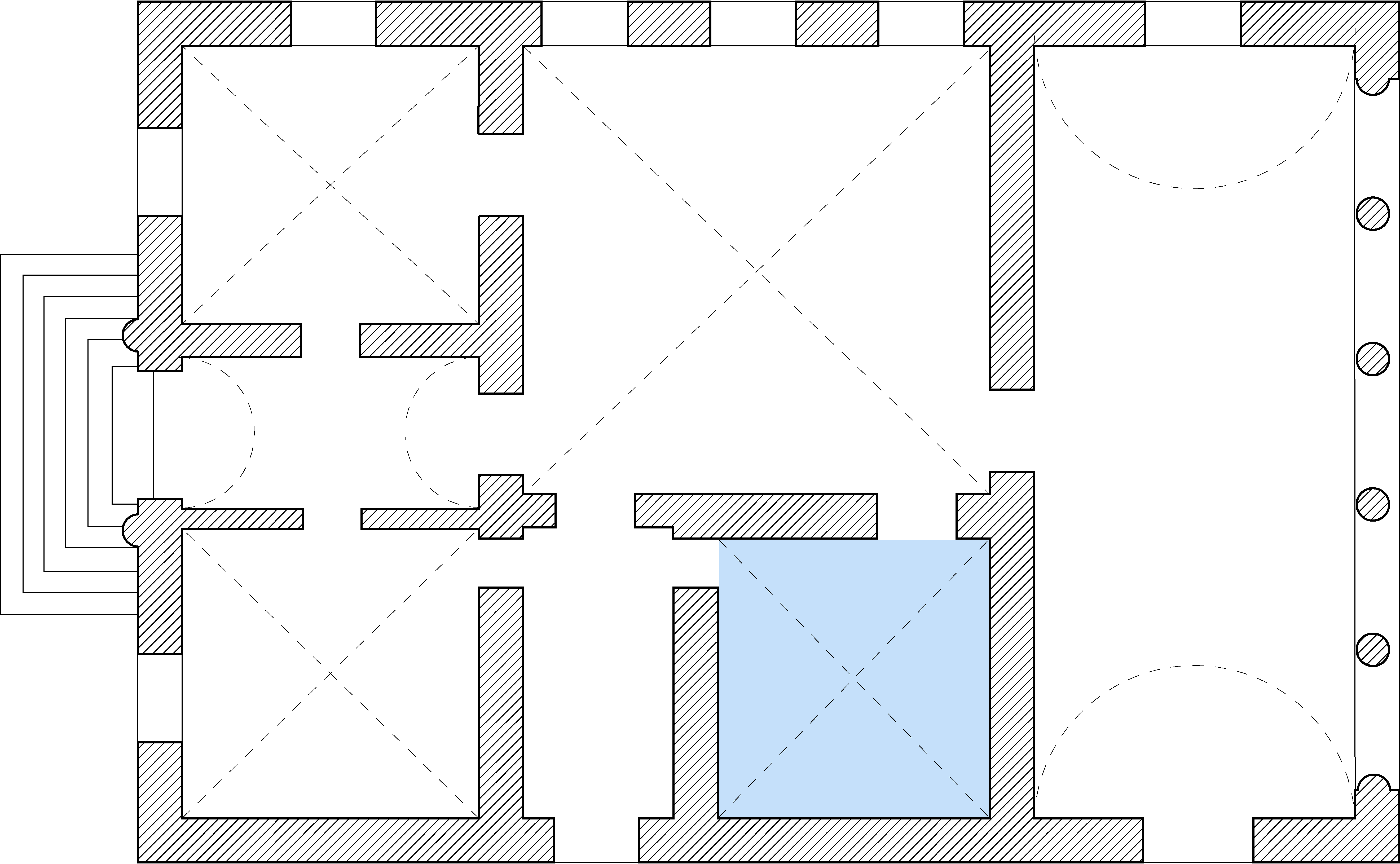
Three famous love stories from Antiquity are depicted in small rectangles on the ceiling of the Institute office: Cupid and Psyche (west and south sides), Bacchus and Ariadne (north side, with Bacchus symbolized by a dolphin and an elephant), and Orpheus and Eurydice (east side).
Vatican embassy office
The portraits in the Vatican embassy office depict famous men in the Florentine tradition: Petrarch, Dante, the Medici court poet Poliziano and Raphael himself, whose image is copied from a "double portrait" (doppio ritratto) in the Louvre.
Salone - Parte sud della volta 2
Lorem ipsum dolor sit amet, consectetur adipiscing elit. Pellentesque sit amet egestas urna, quis rutrum sem. Ut vestibulum fringilla nulla, in tincidunt dolor. Mauris rutrum molestie metus eget gravida. Aenean sit amet libero id tellus imperdiet vulputate. Nullam elit metus, placerat et libero vel, vulputate mollis sem. Nam laoreet tempor vestibulum. Vestibulum sollicitudin varius pharetra. Proin consequat nisi eget urna fringilla, et convallis felis congue. Aliquam sagittis tristique dolor, sed posuere enim elementum sit amet. Nulla consectetur pellentesque fringilla. Maecenas ac purus mollis, accumsan nisl id, dictum leo. Praesent mattis commodo justo, a varius magna imperdiet sit amet. Etiam sed pulvinar urna. Phasellus efficitur iaculis luctus.
The ceiling
The ceiling of the salone still bears the impresas, or emblems, of Baldassarre Turini and his patrons, Pope Leo X and Clement VII. In the center of the ceiling is the large coat of arms of Pope Paul V, a member of the Borghese family (black eagle and white dragon). The four frescoes that once decorated the ceiling are now in Palazzo Zuccari, home to the Bibliotheca Hertziana, the German art history institute.
VALENTIN DE BOULOGNE'S PAINTING
The impressive oil painting is Allegoria d'Italia (originally colled Historia d'Italia) by Valentin de Boulogne (1591-1632), a Frenchman who worked in Rome for many years. One of de Boulogne's major works, its importance has been highlighted in several exhibitions. The crowned female figure, holding a spear and shield, is a presonification of Italy. At her feet, the nuts and fruit symbolize the fertility of the land. Beneth her, two bearded, naked male figures represent the two great Italian rivers, the Tiber (symbolizing Rome and the Papal States, with the wolf and twins Romulus and Remus) and the Arno (Florence and Tuscany, with the lion). He was commissioned by Cardinal Francesco Barberini to paint this image for the Extraordinary Jubilee of 1628. In the top left-hand corner, a tree stump with a swarm of bees rising from it is a symbol of the Barberini family.
Dante
Portrait of Dante. The ceiling paintigs were badly damaged in the nineteenth century, when the religious sisters who bought the villa covered up and even destroyed images they considered immodest. The ceiling paintings in the Vatican embassy and Institute offices were uncovered during the 1974-1975 restoration.
Petrarch
A portrait of Petrarch, a scholar and poet of the early Italian Renaissance, is copied from the Parnassus (Parnaso) in the Raphael Rooms, situated on the second floor of the Pontifical Palace, now part of the Vatican Museums, in Vatican City.
Raphael
Portrait of Raphael himself, whose image is copied from the "Self portrait with a friend" in the Louvre.
La Fornarina
The circular centrepieces in the director's study are copies of Raphael's famous female figures. The vault on the salone side contains Raphael's beloved "La Fornarina" who, legend has it, was the daughter of a Trastevere baker.
Sibilla
The circular centrepieces in the director's study are copies of Raphael's famous female figures.
Lucrezia Tornabuoi
The beautiful portrait in the medallion on the north (vestibule) side may be based on a Domenico Ghirlandaio's painting of Lucrezia Tornabuoi. (The original is in the Capella Tornabuoi in the church of Santa Maria Novella, Florence.)
LOGGIA (The view)
The views from the loggiato the Vatican and Alban Hills beyond are unrivalled. The space was originally built both to admire the landscape and as a cool and airy covered terrace. One wall opens out onto a view towards the centre of Rome, framed by marble columns, and topped by alternating arches and straight beams. Four marble columns have been repurposed from an ancient building. The three on the left are white and purple pavonazzetto marble, while the one on the right is grey bigio marble, with the inscription “amore mio caro.” The loggia is the full width of the original villa.
The ceiling
The ceiling of the salone still bears the impresas, or emblems, of Baldassarre Turini and his patrons, Pope Leo X and Clement VII. In the center of the ceiling is the large coat of arms of Pope Paul V, a member of the Borghese family (black eagle and white dragon). The four frescoes that once decorated the ceiling are now in Palazzo Zuccari, home to the Bibliotheca Hertziana, the German art history institute.
Office
Three famous love stories from Antiquity are depicted in small rectangles on the ceiling of the Institute office: Cupid and Psyche (west and south sides), Bacchus and Ariadne (north side, with Bacchus symbolized by a dolphin and an elephant), and Orpheus and Eurydice (east side).
Office
Three famous love stories from Antiquity are depicted in small rectangles on the ceiling of the Institute office: Cupid and Psyche (west and south sides), Bacchus and Ariadne (north side, with Bacchus symbolized by a dolphin and an elephant), and Orpheus and Eurydice (east side).
Office
Three famous love stories from Antiquity are depicted in small rectangles on the ceiling of the Institute office: Cupid and Psyche (west and south sides), Bacchus and Ariadne (north side, with Bacchus symbolized by a dolphin and an elephant), and Orpheus and Eurydice (east side).
Salone
The walls of the salone are painted to look like slabs of precious coloured marble, modelled on ancient imperial buildings such as the Pantheon. During the restorations some of this painting was restored, while other walls were left in their neoclassical state to mark the alterations made by the architect Giuseppe Valadier in 1807. Other features introduced under Valadier are the plaster reliefs by Antonio Canova above the doors, with the themes “Socrates at the Battle of Potidea” and “Socrates bids farewell to his family” (west wall, on either side of Valentin de Boulogne’s painting)’; “The Birth of Bacchus” and “The Death of Adonis” (south wall); “Teaching the ignorant” and “Feeding the hungry” (east wall, loggia side).
Graffito
In 1527, the mercenaries of Holy Roman Emperor Charles V invaded Rome and ransacked the city. The villa may have been damaged during this Sack of Rome (Sacco or Presa di Roma). Graffiti scrawled on the wall of the salone recalls the event: A dì 6 de magio 1527 fo la presa di Roma.
Socrates at the Battle of Potidea
The walls of the salone are painted to look like slabs of precious coloured marble, modelled on ancient imperial buildings such as the Pantheon. During the restorations some of this painting was restored, while other walls were left in their neoclassical state to mark the alterations made by the architect Giuseppe Valadier in 1807. Other features introduced under Valadier are the plaster reliefs by Antonio Canova above the doors, with the themes “Socrates at the Battle of Potidea” and “Socrates bids farewell to his family” (west wall, on either side of Valentin de Boulogne’s painting)’; “The Birth of Bacchus” and “The Death of Adonis” (south wall); “Teaching the ignorant” and “Feeding the hungry” (east wall, loggia side).
Socrates bids farewell to his family
The walls of the salone are painted to look like slabs of precious coloured marble, modelled on ancient imperial buildings such as the Pantheon. During the restorations some of this painting was restored, while other walls were left in their neoclassical state to mark the alterations made by the architect Giuseppe Valadier in 1807. Other features introduced under Valadier are the plaster reliefs by Antonio Canova above the doors, with the themes “Socrates at the Battle of Potidea” and “Socrates bids farewell to his family” (west wall, on either side of Valentin de Boulogne’s painting)’; “The Birth of Bacchus” and “The Death of Adonis” (south wall); “Teaching the ignorant” and “Feeding the hungry” (east wall, loggia side).
The Birth of Bacchus
The walls of the salone are painted to look like slabs of precious coloured marble, modelled on ancient imperial buildings such as the Pantheon. During the restorations some of this painting was restored, while other walls were left in their neoclassical state to mark the alterations made by the architect Giuseppe Valadier in 1807. Other features introduced under Valadier are the plaster reliefs by Antonio Canova above the doors, with the themes “Socrates at the Battle of Potidea” and “Socrates bids farewell to his family” (west wall, on either side of Valentin de Boulogne’s painting)’; “The Birth of Bacchus” and “The Death of Adonis” (south wall); “Teaching the ignorant” and “Feeding the hungry” (east wall, loggia side).
The Death of Adonis
The walls of the salone are painted to look like slabs of precious coloured marble, modelled on ancient imperial buildings such as the Pantheon. During the restorations some of this painting was restored, while other walls were left in their neoclassical state to mark the alterations made by the architect Giuseppe Valadier in 1807. Other features introduced under Valadier are the plaster reliefs by Antonio Canova above the doors, with the themes “Socrates at the Battle of Potidea” and “Socrates bids farewell to his family” (west wall, on either side of Valentin de Boulogne’s painting)’; “The Birth of Bacchus” and “The Death of Adonis” (south wall); “Teaching the ignorant” and “Feeding the hungry” (east wall, loggia side).
Teaching the ignorant
The walls of the salone are painted to look like slabs of precious coloured marble, modelled on ancient imperial buildings such as the Pantheon. During the restorations some of this painting was restored, while other walls were left in their neoclassical state to mark the alterations made by the architect Giuseppe Valadier in 1807. Other features introduced under Valadier are the plaster reliefs by Antonio Canova above the doors, with the themes “Socrates at the Battle of Potidea” and “Socrates bids farewell to his family” (west wall, on either side of Valentin de Boulogne’s painting)’; “The Birth of Bacchus” and “The Death of Adonis” (south wall); “Teaching the ignorant” and “Feeding the hungry” (east wall, loggia side).
Feeding the hungry
The walls of the salone are painted to look like slabs of precious coloured marble, modelled on ancient imperial buildings such as the Pantheon. During the restorations some of this painting was restored, while other walls were left in their neoclassical state to mark the alterations made by the architect Giuseppe Valadier in 1807. Other features introduced under Valadier are the plaster reliefs by Antonio Canova above the doors, with the themes “Socrates at the Battle of Potidea” and “Socrates bids farewell to his family” (west wall, on either side of Valentin de Boulogne’s painting)’; “The Birth of Bacchus” and “The Death of Adonis” (south wall); “Teaching the ignorant” and “Feeding the hungry” (east wall, loggia side).
Painting
When the villa was being restored, a painted Borghese coat of arms was found on the main wall of the vestibule above the salon door, referring to a visit by Pope Paul V, a member of the family, in 1608. Below the painting, Latin text on a marble plaque records the fact that two centuries later, in 1807, another pope visited the villa: Pius VII "found respite here from the unrest caused by Napoleon."